Saturday, April 7, 2012

"E" is for "Easter" (or, "G" is for "Gallus-Gallus")

We here at A Field Guide To Doomsday have made no secret of our affection for all things Ol' School Gamma World.  And for me, nothing says "OSGW" ("osgwa"?) like the 1982 1e module, Famine In Far-Go.


FIF-G was the first module/supplement to an rpg I ever acquired (which was convenient, since my very first rpg happened to be the Gamma World 2e boxed set).  I can still remember the occasion:  it was a dreary and rainy Saturday, and instead of plopping down for cartoons, I was dragged way-too-early to my aunt-n-uncle's furniture-retailer-slash-Zenith-TV-repair-shack in Beautiful Downtown Willis, TX (which, at the time, consisted of a Dairy Queen, and not much else...hell, you had to drive over 10 miles away just to get to the Piggly Wiggly).  And if that wasn't bad enough, we then went to a lakeside timeshare presentation where my dad proudly received some Real, Genuine, 110% Authentic Faux-Gold Presidential Coins...enclosed in their own frame!  WITH REAL CARDBOARD BACKING!!!

At the end of that agonizing day, we stopped off at the longggggggg departed Gierspeck & Roper bookstore, where I could pick out one thing.  

Famine In Far-Go beckoned, and I read it all the way home...and re-read it about another half-dozen times that weekend.

I was a bit confused by the presentation, because the art wasn't as polished as my 2e boxed set, and the  rules parts were "off" (I didn't grasp the hows and whys behind different editions, you see).  And the new monsters seemed EXTRA FREAKY when compared to the core bestiary.

Albino buzzsaw-horned antilopes?  Purple bug-morphing bison?  Weather-controlling be-jetpack'd moose?

And nothing was weirder than the belligerent chickens known as the Gallus Gallus 5/13s. They were hideous AND hilarious, and possessed mostly detrimental mutations, and lived in an atomic robo-factory.


AWESOME.

I fell in love with those ridiculous chickens...but have never gotten the opportunity to do anything with them...

...until now!

I hereby present my favorite official Gamma World monsters, adapted for Mutant Future from the original text.  I claim no credit for their majesty.

Happy Easter, everybody.


Gallus-Gallus

No. Enc.:  1d6 (2d6)
Alignment:  Chaotic
Movement:  120' (40')
Armor Class:  7
Hit Dice:  7
Attacks:  1 (bite or weapon)
Damage:  1d4 or by weapon
Save:  L7
Morale:  9
Hoard Class:  VII, XIX
XP:  2,890

Encountered in Ancient automated hatcheries and food processing plants, the beings known as the Gallus-Galluses are corpulent, squat, 4' tall avians with cyclopean visages and patchy yellow-orange feathers.  They are cunning, deadly, and malignant, and bent on the total domination of all other life forms.  Pure Humans incur the greatest of the Gallus-Gallus' wrath, based on the treatment of domesticated chickens in The Time Before.

Gallus-Galluses lack depth perception, and suffer -1 To Hit in melee combat, and -2 at range. They make up for this deficiency with their chameleonic abilities, Surprising on a 1-4 on 1d6 and gaining +2 to Initiative.  They are also particularly vulnerable to all known toxins, suffering a -8 to Saving Throws Versus Poison.

Each Gallus-Gallus tribe has a suffix designation based on some arcane numerology known as a "batch number".  The mightiest and most infamous of these perfidious poultry-people are the 5/13s, who raid settlements and drag all Pure Human captives back to their high-tech lairs for "rendering"....

Mutations:  Chameleon Epidermis, Frailty ("No Depth Perception") [D], Intellectual Affinity (Tinkerer), Mind Thrust, Poison Susceptibility [D] (x2)


Not-The-Designer's Notes:  Famine In Far-Go was designed by Michael Price, and developed by Price and Michael J. Richie.  Illustrations provided by Jim Holloway, Jeff Easley, and Timothy Truman(!).

Not-The-Designer's Notes Addendum #1:  The text from FIF-G says the chicken-critters are 4' tall, but the illustrations clearly show them as being larger, based on the scale of backgrounds and furnishings.  I can only assume the pics depict bigger, badder versions....

Not-The-Designer's Notes Addendum #2:  I excluded the "Complete Mental Block" Disability from the original version, which prevented the Gallus Gallus 5/13s from perceiving a particular kind of robot...a robot which happened to be in their lair in abundance.  "Specific Robot Blindness" was just too goofy, even for me.  Feel free to add it in again.

Thursday, April 5, 2012

Mutants In The News — The Dread Yetisaurus Edition

Yesterday, the dino-rific Love In The Time Of Chasmosaurs blog brought attention to articles in Nature and Discover Magazine about Yutyrannus, a feathered theropod that may have been the abominable snowman of the terrible lizard kingdom:  shaggy, carnivorous, and cold-loving.


Chasmosaur's creator David Orr's favorite bit mirrors mine, involving speculation that the "feathers might have been a winter coat...[as] Yutyrannus lived at a time when the average yearly temperature was a nippy 10 degrees Celsius.  Maybe it was the tyrannosaur equivalent of woolly mammoths and woolly rhinos, whose shaggy coats protected them during the Ice Age.

'The idea of woolly tyrannosaurs stalking colder climates in the Cretaceous is kinda mind blowing.'"

Yes, yes it is.

And just remember, folks:  no matter what the fossil record tells you, we here at A Field Guide To Doomsday did it first.


"N" is for "Needlewing"

Needlewing

No. Enc.:  0 (2d12)
Alignment:  Neutral
Movement:  3' (1')
  —Fly:  180' (60')
Armor Class:  0
Hit Dice:  1 hp
Attacks:  1 (peck)
Damage:  1 hp + poison
Save:  L1
Morale:  11
Hoard Class:  VII, VIII
XP:  6

Needlewings are tiny (3" tall), iridescent birds that feed on the nectar produced by the deadliest species of mutant flowering plants.  They dart and flit about, captivating onlookers with their dazzling beauty.

Much like Ancient clownfish and anemones, needlewings live in symbiosis with their host flora.  The birds nest in and/or around the plants, using them for protection and sustenance...and return the favor by attacking and subduing anything that approaches, for they inject venom (determined randomly on the Poison Class Table) with each and every stab of their beaks.

Some needlewings have developed a specialized toxin that acts as a contact version of the Fragrance Development Mutation.  Upon injection and a failed Saving Throw Versus Poison, their hypnotically-compelled victims march right into the clutches of the carnivorous host. Needlewings with this variant venom often stray far from their plants, actively hunting down prey.

A needlewing's Hoard Class represents the scattered/buried possessions of victims consumed by the host.

Mutations:  Toxic Weapon (Venom)

Wednesday, April 4, 2012

"S" is for "Sabre-Toothed Spiger"

Sabre-Toothed Spiger

No. Enc.:  1d3 (1d3)
Alignment:  Neutral
Movement:  150' (50')
Armor Class:  5
Hit Dice:  5
Attacks:  1 (bite)
Damage:  2d8 + acid
Save:  L3
Morale:  9
Hoard Class:  VI
XP:  650

When not prowling the grasslands (and Surprising on a 1-4 on 1d6) for prey, the 7' long sabre-toothed spigers lurk in their trapdoor-concealed burrows, pouncing upon anything that saunters past (Surprising on a 1-5 on 1d6).  Their massive 2' long fangs drip with acidic venom.  If injected with a successful bite attack, the acid does 1d12 continuous damage per round for 1d4+1 rounds...but if the spiger misses its To Hit roll within 3, the acid still splatters the target, doing 1d8 external damage per round for 1d3 rounds.

Sporting vaguely feline-like features, sabre-toothed spigers are more vocal than most mutant arachnids, and snarl and hiss when agitated.

Rumors persist that there are bigger, nastier breeds that reside in elaborate web networks instead of subterranean dens.

Mutations:  Toxic Weapon (Venom)

Tuesday, April 3, 2012

Mutants In The News — Nosferatot Edition

Completely by accident, it's been Halloween In April here at A Field Guide To Doomsday, what with the vehiculas and vampire trees and such.

And now comes news of a beautiful bouncing baby girl...born completely without blood to call her own!!!


(Some editing was required...because everyone knows vampires don't photograph.)

The phantom-pallor'd Countess Olivia Norton was born with "haemoglobin levels of just three out of normal level of 18...which meant the plasma...could not be classified as proper blood."

Boogity!

(I swear all of today's sanguinary silliness wasn't planned—it's just been a that kind of day at work.)

Radioactive Review — 'Wisdom From The Wastelands' #5: Domesticated Creatures'


After the relative savaging I gave Issue #4, I am quite happy to cleanse the ol' palate with one of my favorite kinds of supplements:  new critters.

Issue #5 features, and I quote from the intro, "10 new creatures that the people of the post-apocalyptic wastes have relationships with and make use of in various ways."  Clumsy grammar aside, I like the focus on "tamed" mutants that do more than try to devour the PCs.

Included are the following beasties:

) Big Teeth:  enormous 80' long, 28 HD(!) pinnipeds that serve as living submersible apartment buildings for seafaring types (one can build dens in their honeycombed tusks, you see).  I adore these guys, in part because I love walruses, and in part because it conjures some insane visuals.

) Dangling Gourds:  500' wide masses of levitating, explosive-fruit-dropping plants that serve as housing and transport for the adventurous.  Get several of these vine-islands going, and you have an entire campaign setting where the PCs never have to touch the ground.  (Reminds me of my own skoral entry, if I may be so bold.)

) Hydroroses:  water-generating thornbushes that get stabby if not cultivated.  These are cool.

) Jellybirds:  living, breathing, flying Marshmallow Peeps edible sparrows.  Gross and hilarious.

) Lemming Grasses:  I'll just let the entry speak for itself:  "a grain with kernels that are effectively small rodents."  Also gross, also hilarious.

) Monitor Serpents:  aquatic, 18' long, legless, lizard mounts that generate oxygen for their riders.  Perhaps the most tame entry in the book, and that's saying something.

) Philly's Stones:  rock-hard cacti that shatter weapons (including natural claws, fangs, etc.) upon impact.  Used as living barricades.

) Rana:  not-so-domesticated giant frogs that try to eat their ranchers before their ranchers eat them.  I wish I'd come up with these first.

) Leafy Sandstones:  carnivorous desert vines that essentially excrete sandstone.  Houses made from this material have to be fed, or they'll crumble.  Nifty!

) Tarry Maple:  24 HD(!) killer trees that shed blood-infused leaves.  Not really sure how these count as "domesticated", unless the word now means "useful only to draculas".

Rounding out the material are two new mutations, Alter Physical State and Alter Soil Consistency.  The former works as usable-3-times-per-day alchemy (but gives no details as to whether ranged or touch-based), and the latter gives plants the ability to change earth density from softer to harder.


Each entry gets its own public domain pic.


Aside from a handful of grammatical / editorial mistakes, this is a great little supplement, if for no other reason than six of the new creatures are plants.  Vegetation is always under-represented in sourcebooks, and it gets a chance to shine here.  It's an added bonus that the enclosed mutants interact in useful ways with the setting.

This is a good'un.  Buy it.

"V" is for "Vehicula"

Vehicula

No. Enc.:  1 (1)
Alignment:  Chaotic
Movement:  360' (120')
Armor Class:  4
Hit Dice:  15
Attacks:  1 (butt or trample)
Damage:  3d6 or 5d8
Save:  L8
Morale:  12
Hoard Class:  X, XXII
XP:  5,100

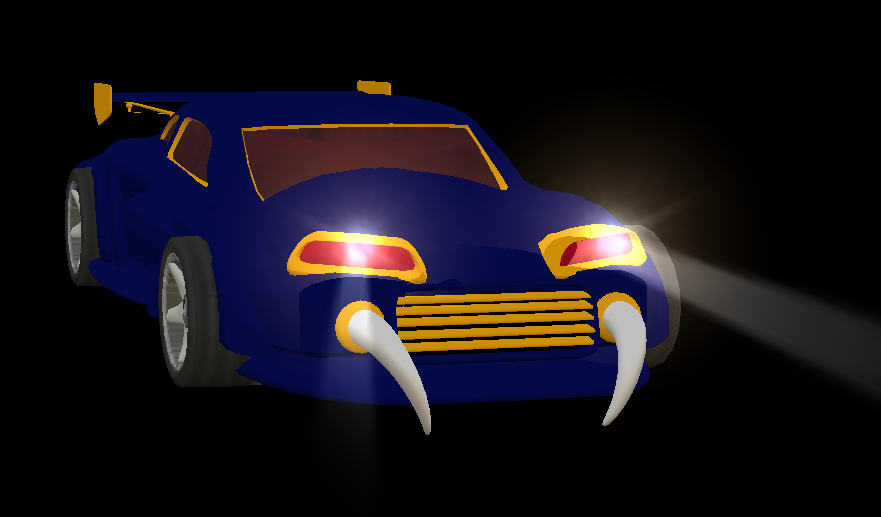
Resembling automobiles considered ancient in Ancient times, the metallic monstrosities known as vehiculas cruise the midnight highways and byways of the Mutant Future in search of the only fuel that sustains them:  the lifeblood of sentient beings.  Their frames and detailing gleam with impossible perfection, their headlamps blaze a baleful red, and their windowed interiors roil with brackish plasma; truly, the uncanny constructs are the stuff of a Restorationist's worst nightmares.

Vehiculas utilize drive-by maneuvers to bring low their victims, either by sideswiping (Charging, doing double damage) or ramming (Trampling, gaining +4 To Hit) them outright. Movement is key to their assaults; a stuck or otherwise immobile vehicula cannot attack. Only after its prey is dead will a vehicula siphon up the gooey remains with its "fender fangs". [Vehiculas can reach top speeds of 240 mph, as per the vehicle listings on p. 132 of the Mutant Future Core Rules.  These rates don't apply to combat, however.]

Vehiculas are utterly immune to all Mental Mutations, and conventional melee weapons and firearms only do half damage against them.

A vehicula's Hoard Class represents the salvage value of its parts.  The consequences of transplanting such unholy components into other conveyances are unknown...but probably catastrophic!

Mutations:  None


Sunday, April 1, 2012

"F" is for "Fractyl"

Fractyl

No. Enc.:  1d4 (1d10)
Alignment:  Neutral
Movement:  18' (6')
  —Fly:  150' (50')
Armor Class:  4
Hit Dice:  3
Attacks:  3 (2 claws, 1 bite)
Damage:  1d6 / 1d6 / 1d8
Save:  L4
Morale:  10
Hoard Class:  VII
XP:  185

Fractyls are freakish, 5' tall, winged beasts made of living crystal.  They roost in the top floors of ruined skyscrapers (often perching like glittering gargoyles), and Dive to carry off over-sized vermin, toxic fish, and hapless adventurers.

Fractyls are immune to all energy attacks but cold- (suffering the appropriate -2 Saves against them, as per Epidermal Photosynthesis) and sonic-based.

Refitting an energy-based Advanced Pistol or Advanced Rifle with shards from a fractyl increases its damage output by +2 per die.  Doing so modifies the relevant Technology Roll by -15%.

Mutations:  Aberrant Form (Crystalline Body), Control Light Waves, Epidermal Photosynthesis, Natural Armor (Extreme), Reflective Epidermis (Electricity, Heat, Lasers/Light, Radiation)


Designer's Notes:  Edited to include a sonic vulnerability, which I woefully forgot.  Thanks, Mr. Trey!

Saturday, March 31, 2012

"Y" is for "Yiyi"

Yiyi  ("Treeseer")

No. Enc.:  1 (1)
Alignment:  Neutral
Movement:  30' (10')
Armor Class:  6
Hit Dice:  2
Attacks:  2 (2 claws)
Damage:  1d3 / 1d3
Save:  L5
Morale:  10
Hoard Class:  VI, VIII, XIX, XXII
XP:  101

Eerie and elusive, the nocturnal yiyi (pronounced yÄ«-yÄ«) lurks in the densest, darkest jungles, foraging for grubs, fruits, and nuts.  Its bulbous, milky eyes—and extra eyestalks—seemingly see nothing, yet everything, at the same time.  A yiyi is never Surprised.

By tapping on the trunks/stems with their elongated claws, yiyis "speak" the secret language of plants, and they can commune with all vegetation (mutated or otherwise) in this fashion.  Anyone seeking out a yiyi for its prophetic abilities requires a Mutant Plant companion to translate.

A yiyi's grove is littered with precious artifacts and offerings left by pilgrims and disciples. But legend has it that robbing from or, worse, slaying a yiyi will incur the wrath of the entire planet's plantlife....

Mutations:  Increased Sense (Vision), Extra Parts (Eyes), Killing Sphere, Optic Emissions (Bright Eyes, Gamma Eyes), Possession, Precognition


Friday, March 30, 2012

"F" is for "Falkaiser"

Falkaiser

No. Enc.:  1 (1)
Alignment:  Chaotic
Movement:  18' (6')
         —Fly:  420' (140')
Armor Class:  2
Hit Dice:  4
Attacks:  3 (2 claws, 1 bite)
Damage:  1d4 / 1d4 / 1d6
Save:  L6
Morale:  9
Hoard Class:  XVI
XP:  300

The imperious, domineering falkaisers are raptors with egos inversely proportional to their 2' tall frames.  Their eyes pulse an unholy purple, and bony spurs ring their brows.

Falkaisers possess powerful hypnotic abilities [essentially, a tripling of the Fragrance Development Physical Mutation] that allow them to control up to 24 HD of creatures, or any single creature with less than 19 HD (or 19 CON), within 45' for 6d12 rounds upon a failed Saving Throw Versus Poison.  They lead their  armies in campaigns of conquest, targeting isolated settlements and townships.

Despising physical contact with their inferiors, falkaisers avoid combat, preferring to direct their thralls from the sidelines.  They will engage if forced, though, using Dive attacks almost exclusively.

All falkaisers vocalize in sneering, vaguely Ancient European accents.

Mutations:  Fragrance Development (x3)


Wednesday, March 28, 2012

Radioactive Review — 'Wisdom From The Wastelands' #4: New Races


Nasty, brutish, and short review:  Ugh.  New PC classes.  Power creep and utter needlessness abounds.


The five-page Wisdom From The Wastelands #4: New Races introduces 7 new PC races (synonymous with other games' character classes) for Mutant Future, along with some new Robot/A.I. interaction rules.

The additions include:

) Ancients:  Healthier, smarter, and prettier time-lost Pure Humans.  d8 HP.  Start with 1d3 non-defect Mutations justified as pre-Apocalypse cyberware.  Technologically savvy. Vulnerable to current diseases and poisons.

) Aquatics:  Pure Humans (not Mutant Humans, oddly) who've been all Patrick Duffy'd up, with various degrees of beneficial related mutations.  d8 HP.

) Body Masters:  Mutant muscleheads who've bred out the Mental Mutations and Physical Drawbacks from their line.  Can trade up physical stats while reducing mental.  d6 HP. Improved physical-ish Saves; diminished energy-ish ones.

) Exotics:  Body-modded, anime-styled Furries.  Still considered to be Pure Humans, but gain up to 4(!) at-will "cosmetic" Mutations.  d8 HP.

) Humans, "Regular":  Like Pure Humans, but weaker.  Mutation-prone.  Begin with d8 HP, but shift to d6 upon gaining Mutations in play.

) Insectoids:  Bug PCs.  Mutation-heavy.  Increased Strength and Willpower; reduced Intelligence and Charisma.  d6 HP.

) Mind Masters:  The inverse of Body Masters.  d4 HP.

After the new races come the optional A.I. Recognition rules.  They flesh out how Robots and/or A.I.s will interact with PCs, with a table listing modifications based on Mutationsthe more freakish the PC = the worse the interaction.  Innocuous.


I get why players love new options.  More options = theoretically more chances for Fun-with-a-capital-F.  Who doesn't love Fun?

But this crusty GM doesn't see the need for the kind of options presented by WftW #4, as almost everything  is already embodied in the Mutant Future Core Rules.  

Want to play an Ancient or Regular Human?  Fine.  Tweak your standard Pure Human.

Want to play an Aquatic, Exotic, or Body/Mind Master?  Just ensure you roll well (*snort*) on the Random Mutation charts.

Want to play an Insectoid?  You already can, if you pick a buggy Mutant Animal at character creation.

And not only do these classes overlap with what's already available, but they are inherently "better".  Better HD.  Better Mutations.  Better modifiers.  Better odds at not ending up like these iconic UHDs ("Utterly Hopeless Dudes"):


So, sure, I understand why Players might want this material.  The new classes come with plenty of perks not available by rolling up your random Mutant the ol' fashioned way.  You get to streamline your character into something predictable and, even better, playable.

But my gut reaction to this supplement was the same as when I first read Unearthed Arcana wayyyyy back in the day:  Why would a GM inflict this on himself?!

Mutants In The News — "Well, We Know What To Feed The Pythons" Edition


Florida is fast becoming the Australia of the U.S.  And by that, I mean every animal there wants to kill you.


Tuesday, March 27, 2012

"L" is for "Losk"

Losk

No. Enc.:  1d6 (2d6)
Alignment:  Any
Movement:  120' (40')
Armor Class:  4 (or less)
Hit Dice:  6
Attacks:  1 or 2 (1 or 2 weapons) (see below)
Damage:  by weapons(s) (see below)
Save:  L6
Morale:  8
Hoard Class:  XIV + see below
XP:  1,820

The Losk (both singular and plural) are a race of folksy, hermaphroditic gastropoids found in all but the driest climes.  Even the most sinister of their kind are affable and neighborly.  A Losk stands 4' tall, and possesses a coiled shell, bulbous eyestalks, and a glistening complexion.

Technologically savvy, many Losk bond Ancient artifacts onto—or into—their carapaces. Any given Losk has a 30% of having Advanced Armor, an Advanced Melee Weapon, a gun/rifle, or a grenade/missile launcher attached to its person.  Such armaments are usable simultaneously with handheld weapons.

Telling a Losk to "go salt itself" is one of the most egregious epithets in the Mutant Future.

Mutations:  Fragrance Development, Increased Willpower, Quick Mind, Reduced Oxygen Efficiency [D], Reflective Epidermis (Cold)


Sunday, March 25, 2012

"T" is for "Thunderbug"

Thunderbug

No. Enc.:  0 (3d8)
Alignment:  Neutral
Movement:  180' (60')
Armor Class:  0
Hit Dice:  5
Attacks:  1 (gore or trample)
Damage:  3d6 or 2d12
Save:  L3
Morale:  9
Hoard Class:  See Below
XP:  800

After developing for 7 years as subterranean larvae, adult thunderbugs—ornery, armored, and bison-sized—claw their way to the surface in search of food.  They migrate in herds, stripping plains bare of plantlife and crops, and their distinctive chirping and bellowing strikes fear into farmers' collective hearts.  (If molebears and karkadillos didn't keep the thundergrub populations down, the Mutant Future would certainly be overrun.)

Thunderbugs do double damage after Charging.

Traders, armorers, weaponsmiths, and artisans pay hefty prices [as determined by the Mutant Lord] for thunderbug "hides" and "ivory".  And Yinsects have been rumored to utilize the creatures as mounts.

Mutations: Natural Armor (Extreme) (x3)


Thursday, March 22, 2012

"S" is for "Scorpodile"

Scorpodile

No. Enc.:  1d4 (1d4)
Alignment:  Neutral
Movement:  90' (30')
Armor Class:  1
Hit Dice:  4+1
Attacks:  3 or 2 (2 claws, 1 bite, or 2 stingers)
Damage:  1d6 / 1d6 / 1d4, or 1d8 + poison / 1d8 + poison
Save:  L3
Morale:  11
Hoard Class:  None
XP:  590

Scorpodiles are ferocious, chitinous, 10' long beasts that prowl swamps and sewers. Though they never stray far from damp environs, they lack the ability to swim, and will never be encountered in waters deeper than 3'.

Scorpodiles are faster than they appear, and gain a +1 with all To Hit rolls.  And their pincers are surprisingly dexterous, allowing the creatures to open doors, pull levers, and manipulate select (non-weapon) objects.  (Fortunately, they're seemingly not that intelligent...seemingly....)

Each of a scorpodile's tail-stingers injects a different type of venom (as determined randomly on the Poison Class Table).

Mutations:  Aberrant Form (Manipulating Pincers), Extra Parts (Limbs, Tails), Toxic Weapon (Venom) (x2)


Wednesday, March 21, 2012

GALAXY LASER TEAM, CONVERGE!!!

Starraider

Hit Dice:  8
Frame:  Biomorph
Locomotion:  Legs (120'/40')
Manipulators:  Advanced Hands
Armor:  Duraplastic (AC 5)
Sensors:  Class 1 (-2 To Hit)
Mental Programming:  Programming
Accessories:  Vocalizer
Weaponry:  Starmitar (1d8+8 damage)
XP:  1,560 (+ 500 per implant)

The elite shocktroopers of the Cosmic Caliphate, starraiders are man-sized constructs that resemble mechanical versions of the Cosmic Caliph himself.  They function as soldiers, enforcers, and peacekeepers, and attack with overwhelming numbers and efficient brutality.

Each starraider is equipped with a starmitar (clearly derived from warp-field technology) that runs for 45 minutes on a minifusion cell.

The standard, expendable starraiders are made from white duraplastic.  Specialized variants include the pink radraiders (designed for irradiated wasteland environs; equipped with Gamma Eyes implants), green leafraiders (jungle warriors with Increased Sight and Hearing implants; Surprise on a roll of 1-4 on 1d6 in verdant environs), and black noxraiders (assassin-bots equipped with Night Vision implants; Surprise on a roll of 1-5 in darkness).

Starraiders all speak in the same synthesized, computerized monotone.


Saturday, March 17, 2012

The Brutal Post-Apocalyptic Wasteland Is All About Scavenging...

...which is the polite way of saying "shameless theft."

Gavin at the snazzy O.M.E.G.A. Future World blog posted a link to a nifty animation called Ruin, by OddBall Animation studios.


I'm cross-posting it here, not only because it's a hoot, but to remind me to keep up with future updates.  (I tends ta get a mite distracteds, ya see.)

And you can check out test footage and other info at Oddball Animation's very own site.


Thanks, Gavin!